Insights
AI, logistics, and digital transformation for Australian operators.

Australia's Voluntary AI Safety Standard: A Compliance Checklist
Australia's Voluntary AI Safety Standard sets out ten guardrails for responsible AI adoption. This practical checklist walks Australian businesses through each guardrail — what it requires, what to do, and how to sequence the work based on your current AI maturity.

The EU AI Act: What Australian Software Exporters Must Do Now
The EU AI Act applies to Australian software and AI vendors selling into Europe, regardless of where they are headquartered. This post explains how the risk tiers work, what high-risk obligations actually require, and a practical compliance path for Australian exporters.

AI in the Australian Public Sector: Procurement Realities
Deploying AI in the Australian public sector means navigating procurement panels, the Australian Privacy Principles, data sovereignty requirements, and algorithmic accountability obligations — all before a model runs in production. This post outlines the practical realities for technical leaders working inside or alongside government agencies.

AI in Australian Financial Services: Risk and Compliance
AI offers Australian financial services firms real capability in fraud detection, compliance automation, and customer operations — but only when deployed with a clear view of APRA, ASIC, and Privacy Act obligations. This article covers the primary use cases, the regulatory landscape, and the technical foundations required to get AI into production in a regulated environment.

AI in Australian Professional Services: Legal and Advisory
Mid-market Australian law firms, accounting practices, and advisory businesses are applying AI to document review, research, and client delivery — but the gap between a demo and a production system that handles client data responsibly is significant. This article covers practical use cases, Australian Privacy Principles obligations, and how to think honestly about ROI without overclaiming.
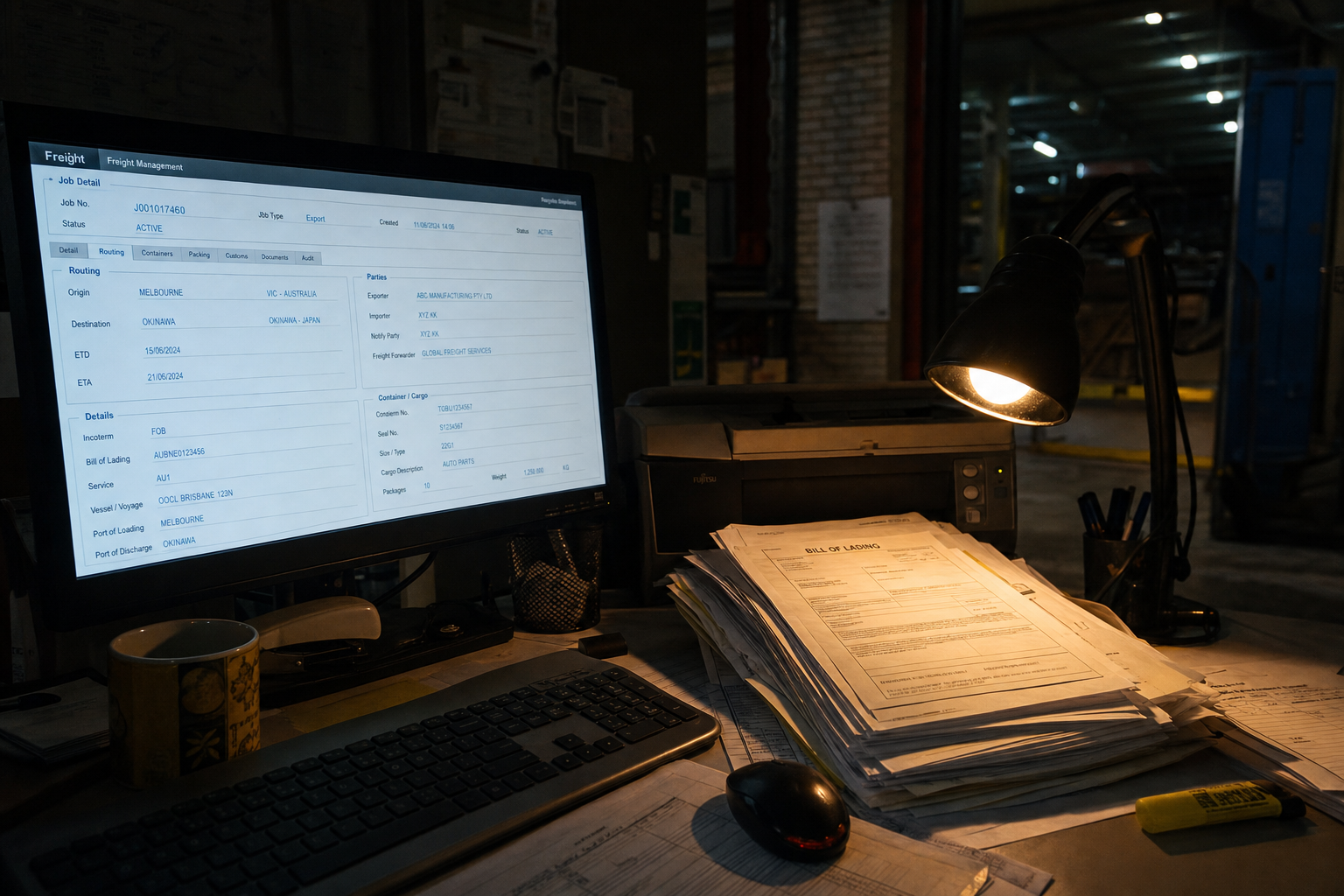
Document Intelligence for Freight Operations: Beyond Manual Data Entry
Manual document processing is one of the most persistent operational drains in Australian freight. Document intelligence — AI that automatically extracts, classifies, and validates data from bills of lading, freight invoices, and customs documents — can eliminate the majority of manual keying and reduce billing errors. This article explains how IDP works, what affects accuracy, and how to approach implementation for a legacy freight operation.

Data Infrastructure Consulting: Building the AI Foundation
Most growing Australian organisations don't have a data problem — they have a data infrastructure problem. This post covers the modern data stack (Snowflake, BigQuery, Databricks), ELT vs ETL trade-offs, data contract patterns, and Australian data sovereignty considerations, with a practical look at consolidating five warehouses into one.

AI Readiness Assessment for Logistics: A Practical Framework
Before committing to any AI build, Australian logistics operators need to know whether their data, systems, processes, and team are ready. This framework covers the five dimensions of AI readiness — with a self-assessment benchmark you can apply to your own operation today.

Technical Debt and AI: Why You Can't Build on a Broken Foundation
Layering AI onto systems carrying significant technical debt doesn't hide the debt — it amplifies it. This post covers how to audit the specific foundations your AI use case depends on, prioritise remediation without a full rewrite, and sequence modernisation and AI adoption so your investment actually reaches production.